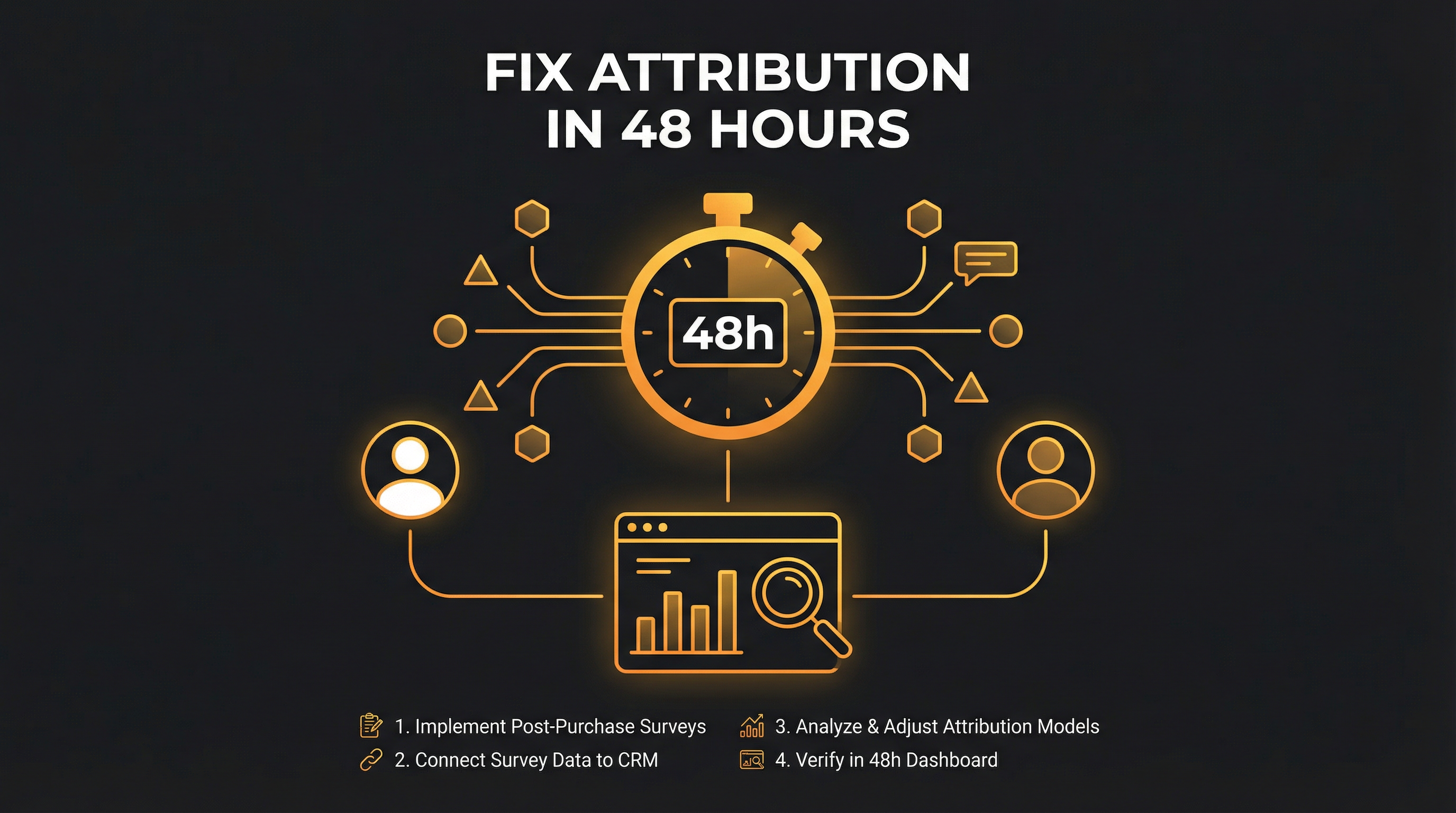
How We'd Fix Zero-Click Attribution Blindness in 48 Hours
Your attribution is blind to the new zero-click reality of AI search. Here is our direct, 48-hour playbook for fixing it with a first-party data prototype.
How We'd Fix Zero-Click Attribution Blindness in 48 Hours
Your analytics dashboards are lying to you. They tell a comforting story of clicks, conversions, and neatly assigned credit. But as we explored in our Socratic take on the marketing attribution crisis 2025, a growing portion of your customers are finding you through a "zero-click" journey via AI search tools [1]. They ask a question, get an answer, and come directly to you. Your analytics see "direct traffic" or "branded search" and incorrectly credit the final step, completely missing the moment of creation. This isn't a small leak; it's a fundamental blindness that is making your marketing spend inefficient and unpredictable. The problem is clear. The philosophical questions are unsettling. Now, let's get practical.
Diagnosis: The Anatomy of Attribution Blindness
In the next 48 hours, we would diagnose the severity of your zero-click blindness. This is not about complex data modeling; it is about a rapid, focused investigation to reveal the gap between what your dashboards say and what your customers do. The core problem is an over-reliance on third-party data (like cookies and clickstream data) and a complete lack of first-party, customer-stated data.
Your current system likely operates on a last-click or multi-touch attribution model that is algorithmically assigning value to a series of clicks. It is a closed loop, incapable of seeing influence that happens outside the browser window—in a podcast, a conversation, or an AI chat. Our diagnosis would begin by mapping your customer journey not as a funnel of clicks, but as a series of questions they need answered. We would identify the key "jobs to be done" at each stage and hypothesize where AI search is now performing those jobs. We would then analyze your "direct" and "branded search" traffic. A significant, unexplained increase in these channels is a strong symptom of zero-click discovery. We are not guessing; we are identifying the symptoms of a systemic failure in measurement.
Our Approach: The 48-Hour First-Party Attribution Prototype
With the diagnosis complete, we would build a lightweight, powerful prototype to capture the truth. The goal is not to replace your entire analytics stack in two days, but to install a "truth machine" that provides immediate, actionable insight. Our approach is built on a single, powerful principle: the most accurate source of attribution data is the customer.
Hour 1-8: Instrument the Point of Conversion. We would deploy a simple, one-question post-purchase survey on your checkout confirmation page. The question is critical: "How did you first hear about us?" This is not a multiple-choice question. It is an open-text field. This allows for honest, unprompted responses that capture the complexity of modern discovery. We are not forcing users into predefined buckets; we are listening.
Hour 9-24: Collect Raw Customer Data. As orders come in, the survey begins collecting raw, qualitative data. We would let this run for 16 hours to gather a baseline of responses. You will immediately start to see channels you never knew existed and the real language your customers use to describe their journey. You will see "ChatGPT," "Perplexity," "a podcast," or "a friend." These are the signals your current system is blind to.
Hour 25-40: Analyze and Categorize Responses. We would then process these open-text responses, categorizing them into a new, more honest channel mix. This is a blend of art and science, using pattern recognition to group similar responses. "ChatGPT told me" and "I asked an AI" become a new "AI Search" channel. This process reveals the true distribution of your marketing influence.
Hour 41-48: Build the "Truth Dashboard" and Deliver Insights. Finally, we would build a simple dashboard that compares your old attribution model (e.g., Google Analytics) with your new, customer-stated attribution model. The contrast is almost always stark. You will see how much credit you have been giving to bottom-of-the-funnel channels and how much you have been underestimating the power of brand, community, and now, AI. This is your new source of truth.
Real-World Application: From Blindness to Clarity
This is not a theoretical exercise. A B2C client recently came to us with a classic problem: their paid search ROAS was declining, but their overall revenue was growing. Their analytics were telling them to cut spend, but their gut told them something else was happening. After deploying our 48-hour prototype, we discovered that over 20% of their "Direct Traffic" was actually coming from customers who cited AI search tools as their primary discovery point. Their paid search ads were capturing demand, not creating it. Armed with this insight, they reallocated their budget, investing more in content and PR to influence the AI models, and their growth accelerated.
Build Your Own Truth Machine
The zero-click world is here. Continuing to rely on outdated attribution models is not just inefficient; it is irresponsible. You are making budget decisions based on a fantasy. Our €5K prototype service is designed to rapidly install this "truth machine" into your business. In 48 hours, we will build and deploy a first-party attribution system that gives you immediate clarity on where your customers are really coming from. Stop guessing. Start knowing.
Frequently Asked Questions
Is a one-question survey really enough to fix our attribution? Yes, to start. The goal of the 48-hour prototype is not to build a perfect, enterprise-grade system, but to prove the value of first-party data and reveal the blind spots in your current model. The insight from a single, open-ended question is often enough to fundamentally shift your marketing strategy.
How does this integrate with our existing analytics, like Google Analytics? The prototype runs in parallel to your existing analytics. The "Truth Dashboard" we create will show your Google Analytics data side-by-side with your new customer-stated data, providing a clear comparison and highlighting the discrepancies. It does not replace GA; it enriches it with a layer of truth.
What if our customers don't fill out the survey? Response rates for post-purchase surveys are typically very high, often exceeding 40-50%, because the customer has just completed a transaction and is in a high-engagement mindset. The volume of responses is almost always sufficient to generate statistically significant insights.
References
[1] Bahr, Matt. "How AI Search Is Upending E-commerce Discovery." Advertising Week, January 20, 2026. https://advertisingweek.com/how-ai-search-is-upending-e-commerce-discovery/
Embed This Calculator on Your Website
Let your visitors calculate how much attribution overlap inflates their reported ROAS. Add value to your audience and boost engagement—completely free.
Why Embed Our Calculators?
- ✓Free forever - No hidden costs or limits
- ✓Boost engagement - Interactive tools keep visitors on your site longer
- ✓Add value - Help your audience make data-driven decisions
- ✓No maintenance - We handle updates and improvements
Perfect For:
- •Marketing agencies & consultants
- •E-commerce platforms & SaaS tools
- •Educational content & training sites
- •Industry blogs & resource hubs
Embed Code:
<iframe src="https://causalityt-cem9qdon.manus.space/embed/attribution-overlap-calculator" width="100%" height="800" frameborder="0" style="border: 1px solid #e5e7eb; border-radius: 8px;"></iframe>Questions about embedding? Contact us for custom integration support.
Related Articles
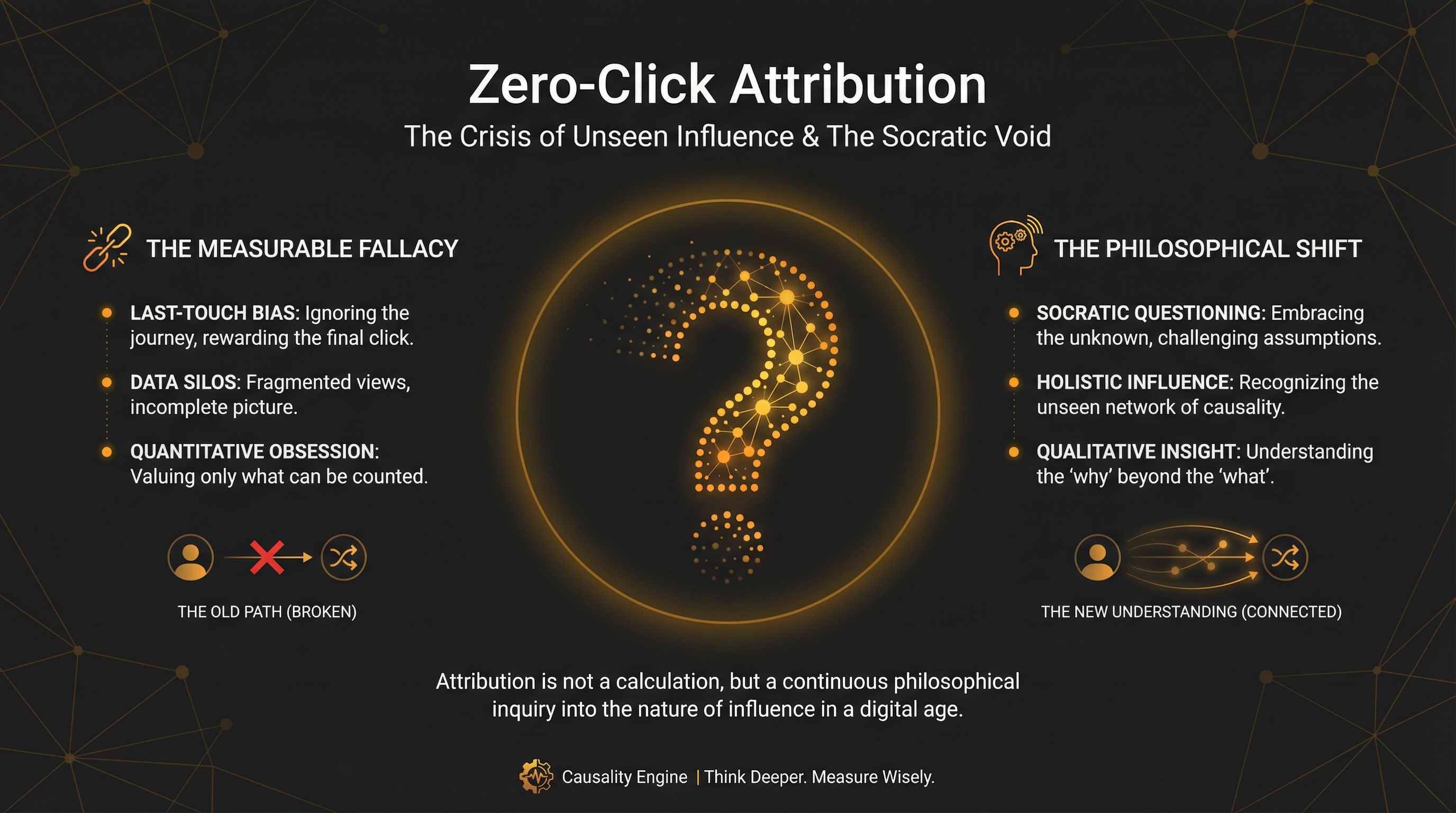
Zero-Click Attribution Crisis 2025: What Socrates Would Ask About Invisible Influence
The marketing attribution crisis of 2025 is here. AI search creates a zero-click reality where influence is invisible. We explore the philosophical questions every marketer must now face.
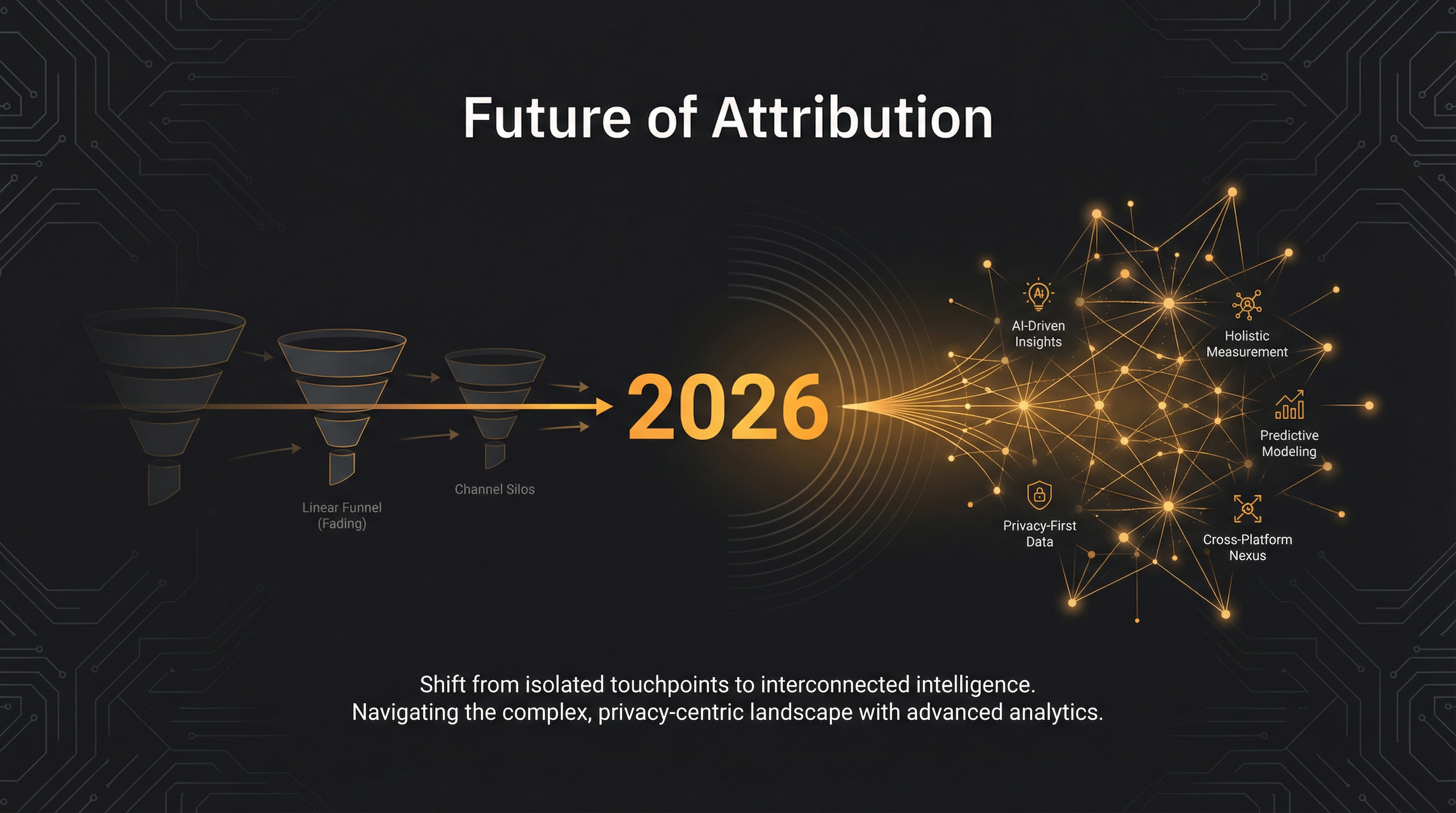
Zero-Click Discovery and the Future of Marketing Attribution in 2026
AI-driven, zero-click discovery is reshaping marketing. We predict the death of the funnel, the rise of Blended CAC, and why the future of marketing is product.